 1-877-581-3396


Blogs
Reaffirm, Redeem, Retain and Pay or Surrender Property in Chapter 7 Bankruptcy
Submitted by the Bond & Botes Law Offices - Tuesday, September 26, 2017
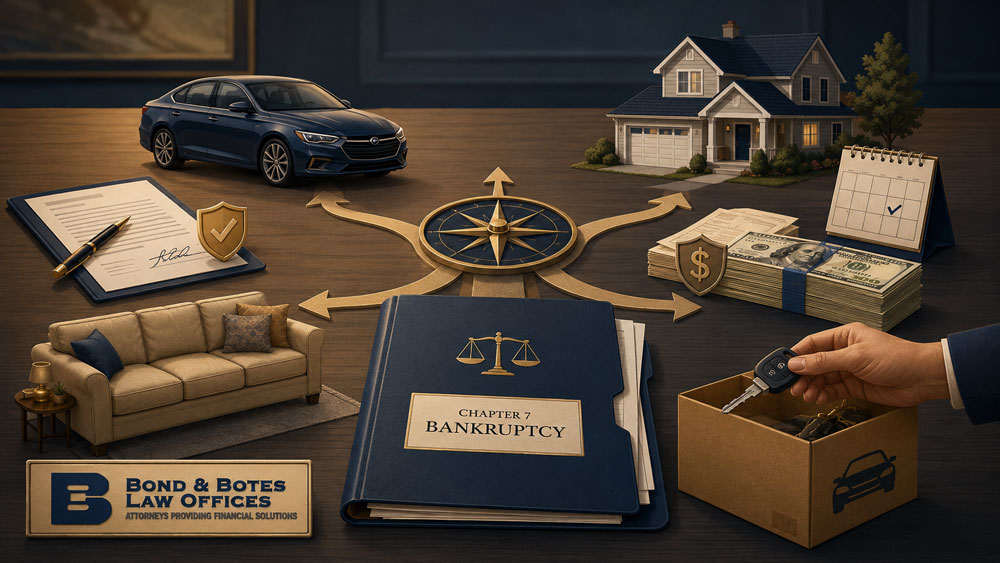
When someone files Chapter 7 bankruptcy and owes money on a secured debt (such as a vehicle loan, mortgage, furniture loan, or other debt secured by property), they must state their intention about whether they plan to keep or surrender the collateral securing the debt. Chapter 7 individual debtors typically do this on Official Form 108, the Statement of Intention, which must be filed within 30 days after filing the bankruptcy petition or by the date set for the meeting of creditors, whichever is earlier.
What are the Bankruptcy Exemptions in Alabama?
Submitted by the Bond & Botes Law Offices - Friday, September 22, 2017

Bankruptcy: We Wrote the Book on It
Submitted by the Bond & Botes Law Offices - Thursday, September 21, 2017
 Have you been struggling with debt but are afraid to seek bankruptcy counsel? So many times people who are struggling financially only turn to Bankruptcy as a last resort, as should be the case. Folks who have never had a reason to learn about what bankruptcy really is and has to offer, don’t know the benefits and usually assume it is a bad thing.
What Happens to Mortgage Debts After Bankruptcy?
Submitted by the Bond & Botes Law Offices - Wednesday, September 20, 2017
 Many people worry about how filing a bankruptcy case will affect their home. As long as your case is carefully planned out ahead of time, you can typically file for bankruptcy relief without affecting your mortgage or your home.
Consumer Financial Protection Bureau Recovers $14 Million in First Half of 2017
Submitted by the Bond & Botes Law Offices - Tuesday, September 19, 2017
 Last week, the Consumer Financial Protection Bureau (CFPB) announced that in January to June of 2017, supervisory actions resulted in $14 million for over 104,000 consumers. "The Bureau’s recent supervision work has returned $14 million to more than 100,000 consumers, and found companies deceiving consumers and violating the law," CFPB Director Richard Cordray stated.
Security Clearance Issues, Problems, Denials and Revocations
Submitted by the Bond & Botes Law Offices - Monday, September 18, 2017
 Security clearance issues are common place in the news these days. The news covers a lot of areas.
The Arbitration Rule: Balancing the Interests of Companies and Consumers
Submitted by the Bond & Botes Law Offices - Friday, September 15, 2017
 Mandatory arbitration provisions are once again at the forefront of policy discourse on Capitol Hill as government agency heads and members of Congress grapple with how to best balance the interests of both companies and consumers. But there doesn’t seem to be much hope for one side of the debate, as Congress is set to overturn a rule issued by the Consumer Financial Protection Bureau (CFPB) in July of this year.
What Happens If You Don’t Pay Your Student Loans?
Submitted by the Bond & Botes Law Offices - Friday, September 15, 2017
 Americans are drowning in student loan debt. More than 3,000 people default on their federal student loans every day. It takes around 20 years for the average student loan borrower to pay off their loans. Today, there are over 44 million Americans with a total student loan debt of $1.4 trillion. But what happens if you can’t make the necessary paym
In the Wake of Hurricanes Harvey and Irma, Beware the Purchase of Flood Damaged Automobiles
Submitted by the Bond & Botes Law Offices - Wednesday, September 13, 2017
 It is estimated that 500,000 insurance claims on damaged automobiles will be filed as a result of Hurricane Harvey alone. Given that Hurricane Irma engulfed the entire state of Florida, the number of hurricane damaged vehicles there can be expected to be immense as well. According to the Chicago Tribune,
Who is Eligible for Social Security Benefits?
Submitted by the Bond & Botes Law Offices - Tuesday, September 12, 2017
 In my blog today, I thought I would discuss generally who is eligible for Social Security retirement and work-related disability benefits.