
 1-877-581-3396

Submitted by the Bond & Botes Law Offices - Tuesday, September 26, 2017
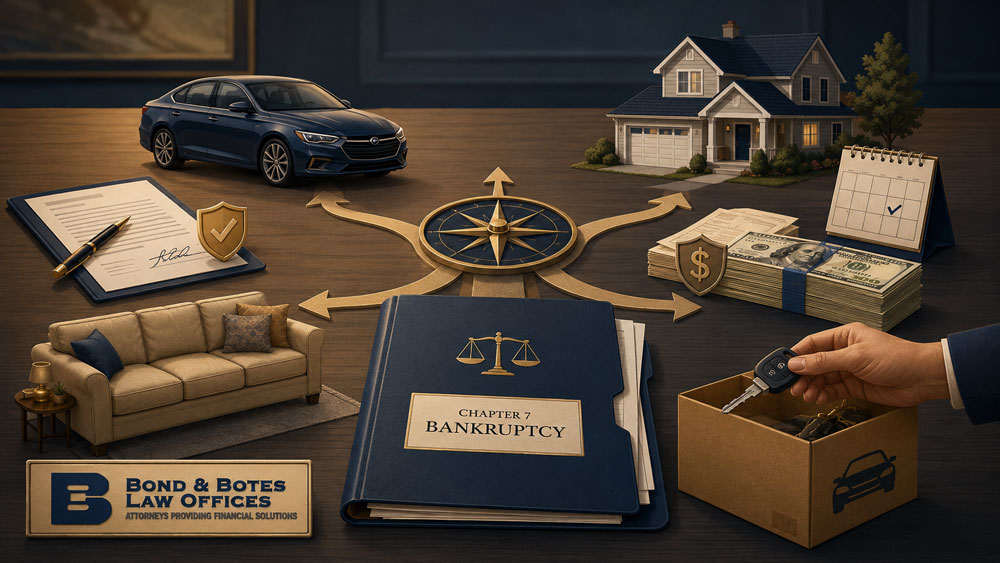
When someone files Chapter 7 bankruptcy and owes money on a secured debt (such as a vehicle loan, mortgage, furniture loan, or other debt secured by property), they must state their intention about whether they plan to keep or surrender the collateral securing the debt. Chapter 7 individual debtors typically do this on Official Form 108, the Statement of Intention, which must be filed within 30 days after filing the bankruptcy petition or by the date set for the meeting of creditors, whichever is earlier. Common options include:
Reaffirm the debt and keep the collateral
To reaffirm a debt, you must sign a reaffirmation agreement, which is a contract agreeing to repay the debt under the terms stated in the reaffirmation agreement. The reaffirmation agreement is filed in your bankruptcy case to let the court know that you intend to keep the property and remain personally liable for that debt after bankruptcy. Reaffirmation agreements are voluntary, but they are time-sensitive and must generally be filed within 60 days after the first date set for the meeting of creditors, unless the court extends the deadline. If your budget shows that the payment may create an undue hardship, or if you were not represented by an attorney during the reaffirmation negotiations, the court may need to review or approve the agreement. By signing the reaffirmation agreement, you are agreeing to have that debt survive your bankruptcy discharge, which means that if you cannot pay the debt after your discharge, the creditor may still be able to collect the debt from you, repossess the collateral, and seek any deficiency balance allowed by law. You may rescind a reaffirmation agreement before discharge or within 60 days after it is filed with the court, whichever occurs later. It is very important to weigh your options before signing the reaffirmation agreement. Often, I ask clients to consider the following questions before signing the agreement:
- Do you need the particular collateral securing the loan?
- Will the creditor take action to get the property back if you choose not to pay for it?
- Are you able to replace the property at a cheaper price than what you would pay the creditor if you reaffirm the debt?
YOU ARE NOT REQUIRED BY ANY LAW TO SIGN A REAFFIRMATION AGREEMENT. The decision to sign a reaffirmation agreement is 100% yours to make, but the creditor’s lien may still survive bankruptcy and the creditor may have rights in the collateral if you do not pay or default.
Redeeming the property from the creditor
To redeem the property from the creditor, you generally pay the creditor the replacement value of the collateral in one lump-sum payment, as agreed by the parties or determined by the court. For personal property in an individual Chapter 7 case, replacement value generally means the price a retail merchant would charge for property of that kind, considering the age and condition of the property. This option may make sense when the property is worth much less than the balance owed on the debt. To be able to redeem property under Chapter 7, the following conditions generally must be met:
- the debt is a dischargeable consumer debt,
- the debt is secured by property intended primarily for personal, family, or household use,
- that is tangible personal property (something you can touch), and
- the property is exempt or the trustee has abandoned the property.
Retain the collateral and pay voluntarily, where allowed
Whether you can “retain and pay” without reaffirming depends on the type of collateral, the loan documents, the creditor, and local court practice. This approach is sometimes discussed with home mortgages because personal liability on the mortgage note may be discharged while the mortgage lien generally remains on the home. If you stay current, some mortgage servicers may accept ongoing payments, but you should not assume that the creditor will modify the loan or report payments the same way after discharge. If you later surrender or lose the collateral after discharge and the debt was not reaffirmed, the creditor generally cannot collect the discharged personal debt from you, although the creditor may still enforce any valid lien against the property.
Retain and pay is not ideal for every situation and may not be available, especially for personal property such as automobiles. Under the Bankruptcy Code, an individual Chapter 7 debtor generally may not retain personal property securing a purchase-money claim unless, within the required deadline, the debtor enters into a reaffirmation agreement or redeems the property. Some creditors may also require a reaffirmation agreement if you intend to keep personal property collateral. Thus, if you fail to reaffirm, redeem, or otherwise reach an allowed arrangement, the creditor may repossess the collateral once the bankruptcy stay no longer prevents it.
When you choose this option, your payment history may not be reported on your credit report because your personal liability on the debt was discharged in your Chapter 7 case. Also, if you later need payment arrangements or a loan modification, the creditor may be limited in how it communicates with you because of the discharge injunction. You may need to contact the creditor or servicer and, in some cases, give written permission before it will discuss voluntary payment or modification options.
Surrendering property back to the creditor
You would choose this option if you no longer want the collateral and do not wish to pay the debt. By surrendering the property back to the creditor, you are making the property available to the creditor to recover under applicable law. After surrender and discharge, the creditor generally cannot collect the discharged personal debt associated with any remaining balance owed, although the creditor may still need to follow applicable law to repossess or foreclose on the collateral. Also, after the creditor takes possession of the collateral, you are generally no longer responsible for keeping or maintaining that property.
Frequently Asked Questions About Secured Property in Chapter 7 Bankruptcy
What are my options for secured property in Chapter 7 bankruptcy?
If you file Chapter 7 bankruptcy and have property securing a debt, such as a vehicle, home, furniture, or other collateral, you generally need to state whether you intend to reaffirm the debt, redeem the property, retain and pay where allowed, or surrender the property.
What does it mean to reaffirm a debt?
Reaffirming a debt means signing a reaffirmation agreement that keeps you personally responsible for that debt after your bankruptcy discharge. This may allow you to keep the collateral, but it also means the creditor may still be able to collect the debt from you if you later default.
Am I required to sign a reaffirmation agreement?
No. You are not required by law to sign a reaffirmation agreement. However, if you do not reaffirm, redeem, or make another allowed arrangement, the creditor may still have rights in the collateral because valid liens can survive bankruptcy.
What does it mean to redeem property in Chapter 7 bankruptcy?
Redeeming property generally means paying the creditor the allowed secured value of the collateral in a lump-sum payment. This option may make sense when the property is worth less than the amount still owed on the debt.
Can I keep collateral and keep paying without reaffirming?
Sometimes, but not always. Retain-and-pay may be discussed with some home mortgages, but it may not be available for personal property such as vehicles. Whether this option is allowed depends on the type of collateral, the loan documents, the creditor, and local court practice.
What happens if I surrender property in Chapter 7 bankruptcy?
Surrendering property means making the collateral available to the creditor. After discharge, the creditor generally cannot collect the discharged personal debt from you, although it may still need to follow applicable law to repossess or foreclose on the collateral.
When do I have to state my intention about secured property?
Individual Chapter 7 debtors typically state their intention on the Statement of Intention. This is time-sensitive, so it is important to speak with a bankruptcy attorney early about the deadline and the best option for each item of collateral.
How should I decide whether to reaffirm, redeem, retain and pay, or surrender?
The right choice depends on the value of the property, the amount owed, whether you need the property, whether you can afford the payments, and what the creditor may do if you do not pay. Because these choices can affect your financial future, you should discuss your specific facts with a bankruptcy attorney.
This post is intended for general information only and does not constitute legal advice. To discuss your specific situation, we encourage you to schedule a confidential consultation with an attorney.