
 1-877-581-3396


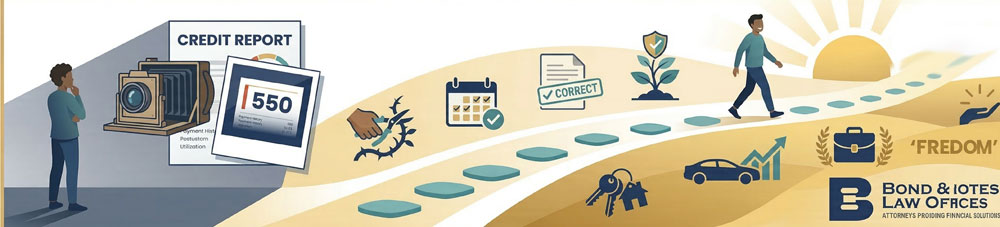
Your Credit Score Is a Snapshot — Not Your Future
Submitted by the Bond & Botes Law Offices - Thursday, March 12, 2026
For many people, few numbers carry more emotional weight than a credit score.
We hear it all the time from clients across Alabama and Mississippi:
“My credit is already ruined.”
“Bankruptcy will destroy my credit forever.”
“I’ll never be able to buy a house again.”
The truth is that many of the most common beliefs about credit scores simply aren’t accurate. And those misunderstandings often cause people to delay getting help that could actually improve their financial future.
Let’s clear up a few of the biggest myths we see.
Myth #1: Bankruptcy permanently destroys your credit
One of the most persistent fears people have is that filing bankruptcy means their credit is ruined forever.
In reality, many people begin rebuilding their credit far sooner than they expect.
For individuals who are already behind on payments, carrying large balances, or facing collections, the damage to a credit score has often already occurred. Addressing the underlying debt problem can actually allow the rebuilding process to begin.
Many clients see their credit scores begin improving within 12 to 18 months after filing because the overwhelming debt that was dragging their score down has been resolved.
Bankruptcy does remain on a credit report for a period of time, but it does not prevent someone from rebuilding credit, obtaining financing, or moving forward financially.
Myth #2: Doing nothing protects your credit
When people are overwhelmed by debt, a common instinct is to wait and hope things improve.
Unfortunately, unresolved collections, late payments, and growing balances often do more long-term damage than taking proactive steps to resolve the situation.
Credit reports continue to update each month. That means missed payments, charged-off accounts, and collection activity continue to affect your score.
Addressing the root problem sooner rather than later often allows the rebuilding process to start earlier.
Myth #3: You can’t rebuild your credit after bankruptcy
In reality, many people begin rebuilding credit immediately after their case is completed.
Some of the most common steps people take include:
-
Carefully reviewing their credit report to make sure accounts are reporting correctly
-
Ensuring discharged debts show a zero balance
-
Disputing inaccurate reporting
-
Establishing new positive payment history over time
Consumer protection laws like the Fair Credit Reporting Act (FCRA) exist specifically to ensure credit reporting remains accurate and fair.
Understanding how your credit report works — and what your rights are — can make a major difference in how quickly your credit begins improving.
Your Credit Score Is a Snapshot — Not Your Future
A credit score reflects your financial past, not your long-term potential.
Life events happen. Medical bills, job loss, divorce, and unexpected expenses affect good people every day.
Legal tools like bankruptcy exist specifically to give individuals a structured path to move forward and rebuild.
At Bond & Botes, we’ve spent decades helping people move from financial stress to financial stability. For many, simply learning the facts about credit scores and bankruptcy removes the fear that has been holding them back from taking the next step.
No matter where your credit stands today, it does not define your financial future.
Sometimes the first step toward rebuilding is simply understanding how the system actually works.
This post is intended for general information only and does not constitute legal advice. To discuss your specific situation, we encourage you to schedule a confidential consultation with an attorney.