
 1-877-581-3396

Submitted by the Bond & Botes Law Offices - Thursday, April 2, 2026
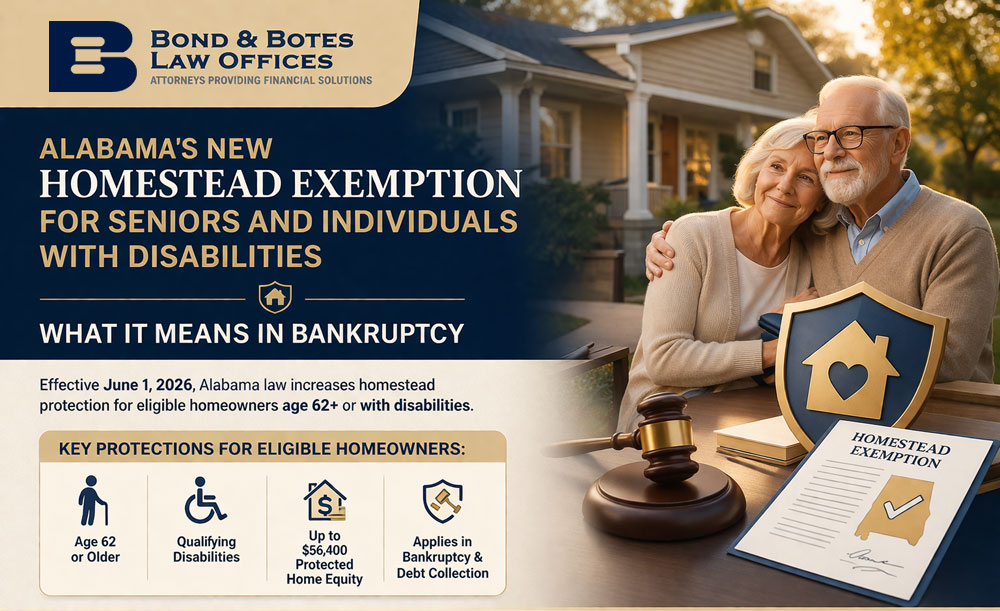
Many people worry about losing their home if they need to file bankruptcy. For older Alabama residents and individuals living with disabilities, a recent change in state law, which will become effective on June 1, 2026, may provide much stronger protection for home equity.
The Alabama Legislature has passed legislation increasing the homestead exemption for certain seniors and individuals with disabilities. If you are age 62 or older, or if you qualify as disabled under the law, this change could significantly affect how bankruptcy works for you.
Below is a simple explanation of what the new law does and how it may apply in a bankruptcy case.
What Is the Homestead Exemption?
A homestead exemption protects a portion of the equity in your primary residence from creditors. In bankruptcy, exemptions determine what property you are allowed to keep.
Alabama law allows residents to protect equity in their home as long as it is their primary residence.
Before this new legislation, Alabama’s homestead exemption was relatively small compared to many states.
For example:
- The current exemption amount is about $18,800 per homeowner (adjusted periodically for inflation).
- Married couples who both own the home can generally double the exemption.
While this protection helps many families keep their homes, it often did not protect seniors or individuals with disabilities who had accumulated significant equity in their homes.
Alabama’s New Homestead Exemption for Seniors and Individuals With Disabilities
The new law significantly increases the homestead exemption for certain individuals.
Under the legislation:
- Alabama residents age 62 or older may claim an increased homestead exemption.
- Individuals with qualifying disabilities may also claim this higher exemption.
- The exemption amount may be as high as $56,400 in protected home equity.
- The increased exemption applies in bankruptcy cases and other debt collection situations.
This change recognizes an important reality: many older residents and individuals living with disabilities may have limited income but significant equity in their homes after years of ownership.
Why This Matters in Bankruptcy
1. It May Allow More Seniors and Disabled Individuals to Keep Their Homes
In a Chapter 7 bankruptcy, the trustee may sell property that has significant non-exempt equity.
For example:
- Home value: $200,000
- Mortgage balance: $150,000
- Equity: $50,000
Under the old exemption structure, much of that equity might have been exposed to creditors.
With the new $56,400 exemption available to seniors and individuals with disabilities, the entire equity could potentially be protected.
This means many eligible individuals may now be able to file Chapter 7 bankruptcy and keep their home.
2. Chapter 13 Cases May Become Easier
In a Chapter 13 bankruptcy, the debtor usually keeps their property but must pay unsecured creditors at least the value of non-exempt assets.
A higher homestead exemption means:
- Less non-exempt equity
- Lower required payments to unsecured creditors
- More affordable Chapter 13 plans
For many seniors and individuals living on disability income, this change could make Chapter 13 far more manageable.
3. It Helps Protect Long-Term Homeowners
Many homeowners purchased their homes decades ago when property values were much lower.
Over time, appreciation may have created substantial equity even though the homeowner’s income has not increased.
This issue is especially common among:
- Retired homeowners
- Individuals living on Social Security, and
- Individuals receiving disability benefits.
The new exemption helps ensure these homeowners are not forced to sell their homes simply because of accumulated equity.
Important Limitations to Understand
Even with the new exemption, several factors still matter in bankruptcy cases:
- Mortgage payments still matter. The homestead exemption does not stop a lender from foreclosing if mortgage payments are not made.
- Bankruptcy residency rules apply. Federal law requires certain residency periods before using state exemptions.
- Proper planning is important. How a bankruptcy case is filed can affect whether a home is fully protected.
Every Situation Is Different
Changes like this can significantly affect bankruptcy strategy. For some seniors and individuals with disabilities, Chapter 7 may now be a better option than Chapter 13, while others may still benefit from restructuring debts through Chapter 13.
Because the details matter, it is important to review your specific situation with an experienced bankruptcy attorney.
We Are Here to Help
At the Bond & Botes Law Offices, we have helped thousands of families across Alabama and Mississippi understand their options and protect what matters most.
If you are facing financial pressure and worried about your home, we would be glad to talk with you about how the new homestead exemption for seniors and individuals with disabilities may apply in your situation.
Phone: 877-581-3396
Email: Click Here to email us through our website
Website: https://www.bondnbotes.com/
This post is intended for general information only and does not constitute legal advice. To discuss your specific situation, we encourage you to schedule a confidential consultation with an attorney.