
 1-877-581-3396


If My Debt Was Discharged in Bankruptcy, Why is There Still a Lien on My Property
Submitted by the Bond & Botes Law Offices - Wednesday, April 15, 2015
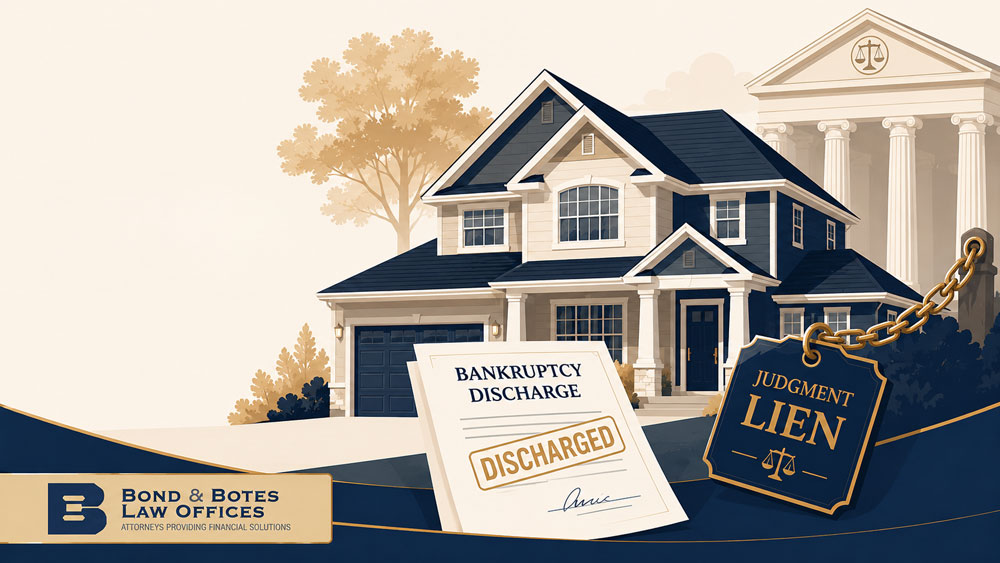
One of the things that I have seen cause confusion for my clients is the fact that the debt owed to the creditor and a lien created to secure the payment of the debt are not the same thing. Clients find it hard to absorb the concept that a debt can be discharged in bankruptcy but a lien can survive the discharge and continue to cause later problems. I can understand this. The client takes the brave step of seeking bankruptcy relief to resolve their problem and possibly discovers a lingering issue with a “lien” that does not necessarily go away upon obtaining a discharge in bankruptcy.
Difference Between Debt and Lien
This is how I explain the concept to my clients. A debt is created usually by the signing of a document obligating the client to repay money that is loaned to them. This debt could be unsecured, meaning it is basically borrowed on the client’s “signature.” Or this debt could be “secured” by either language contained in the contract, i.e., a purchase money security interest that is created because the money borrowed is being used to purchase an asset like a car, or by a separate document like a mortgage on real estate which secures the repayment of the debt when the money is borrowed to purchase the real estate.
If the debt is “secured” by collateral, a lien has been created which is simply an agreement that if the money borrowed is not paid back, the creditor can instead take the property in order to satisfy the debt. The debt and the lien created are two separate entities that are inextricably intertwined. The “debt” can be discharged in bankruptcy but without further steps taken by a qualified bankruptcy attorney, the “lien” may survive the bankruptcy discharge.
Judgment Lien
One area where a lingering “lien” after a bankruptcy discharge may appear is in the form of a judgment lien. When a creditor files a lawsuit to collect a debt that is owed, and the court determines the creditor is owed the money, a judgment is entered against the borrower. Depending on state law, the creditor may be able to create a judgment lien by recording or registering the judgment in the appropriate county land records where the borrower owns property, such as the probate office in Alabama or the chancery clerk’s land records in Mississippi.
The property affected by a judgment lien, the steps required to create it, and the length of time it lasts are controlled by state law. For example, Alabama law provides that a properly filed certificate of judgment is a lien in the county where filed on property subject to levy and sale under execution, and that lien generally continues for 10 years after the date of the judgment. Mississippi law generally limits judgment liens to seven years from the date of judgment unless action is taken before that period expires. A judgment lien may be eliminated or reduced in bankruptcy by filing a motion to avoid the lien if it impairs an exemption, but that analysis depends on the type of lien, the value of the property, other liens, and the exemptions available in the case. If there is non-exempt equity in real estate over and above any debt owed on the property, the judgment lien may attach to that equity and may not be fully avoidable.
What Happens When a Lien Survives a Bankruptcy Discharge?
If a judgment lien survives the bankruptcy discharge, it can often be a significant problem down the road when the owner wishes to sell or refinance a loan on the property. Even though personal liability on the debt may have been discharged, the recorded lien may still have to be addressed before the property can be sold or refinanced. For this reason, it is critical that you provide your bankruptcy attorney with any information regarding a recorded judgment lien. To do so, search the appropriate county land records for the county in which the property is located, either online where available or through the county office that maintains those records, to discover if any recorded judgments against you exist. If you are aware of any possibility that you may have been sued on a debt in the past, it’s important to make this land-records search part of your preparation for filing for bankruptcy relief.
Judgment liens can cause quite a problem when they show up down the road after receiving bankruptcy relief. In order to avoid this problem, consult with a qualified bankruptcy attorney about your options at one of our locations nearest you in Alabama or Mississippi. The initial consultation is always free and confidential.
Frequently Asked Questions About Liens and Bankruptcy
Can a lien stay on my property after bankruptcy?
Yes. A bankruptcy discharge may eliminate your personal liability for certain debts, but a valid lien that was not avoided, released, or otherwise resolved may still remain attached to the property.
What is the difference between a debt and a lien?
A debt is the legal obligation to repay money. A lien is a creditor’s legal claim against property that may secure repayment of that debt. In bankruptcy, the debt and the lien may be treated differently.
What is a judgment lien?
A judgment lien may arise after a creditor wins a lawsuit and records or registers the judgment in the appropriate county land records, depending on state law. Once created, it may attach to property owned by the debtor in that county.
Can bankruptcy remove a judgment lien?
Sometimes. A judgment lien may be avoided in bankruptcy if the debtor files the proper motion and the lien impairs an exemption. Whether the lien can be removed depends on the type of lien, the property value, other liens, and the exemptions available in the case.
Why should I search county land records before filing bankruptcy?
Searching county land records can help identify recorded judgments or liens that may affect real estate. Finding these issues before filing gives your bankruptcy attorney the opportunity to evaluate whether the lien can be addressed during the bankruptcy case.
What should I do if I discover a lien after my bankruptcy discharge?
If a lien appears after bankruptcy, speak with a qualified bankruptcy attorney. The lien may need to be reviewed to determine whether it survived the bankruptcy, whether it can still be avoided, or whether another resolution is needed before selling or refinancing the property.
Do judgment lien rules vary by state?
Yes. The creation, duration, and effect of judgment liens are controlled by state law. This article focuses on general bankruptcy concepts and state-law considerations for Alabama and Mississippi, but a person should get advice about their specific property and location.
Related Information
This post is intended for general information only and does not constitute legal advice. To discuss your specific situation, we encourage you to schedule a confidential consultation with an attorney.